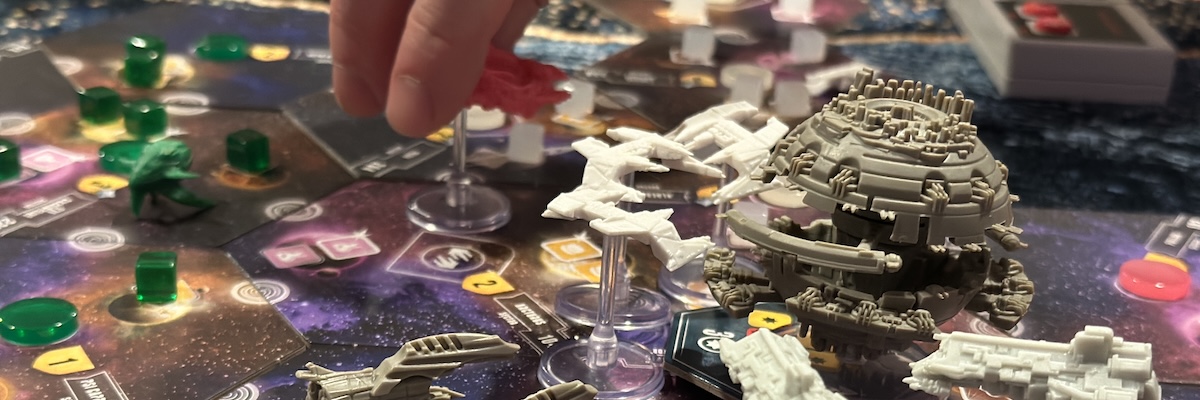
Some games of Eclipse are decided by superior technology. Others by a perfectly timed ambush. And then there are games, like the one we played on Feb 7th 2026, where the universe itself seemed to be writing the story.
The Planta started the game like they had discovered cheat codes. Round one: explored into a supernova (nice). Round two: another supernova (insane). The table watched in disbelief as they expanded into the kind of cosmic real estate the rest of us dream about. Planta of course starts with 4 colony ships so they are perfectly equipped to take full advantage of every available planet.
Round three arrived, and with it came the supernova event roll. Adam picked up the dice nonchalantly. All he has to do is not roll… Snake eyes.
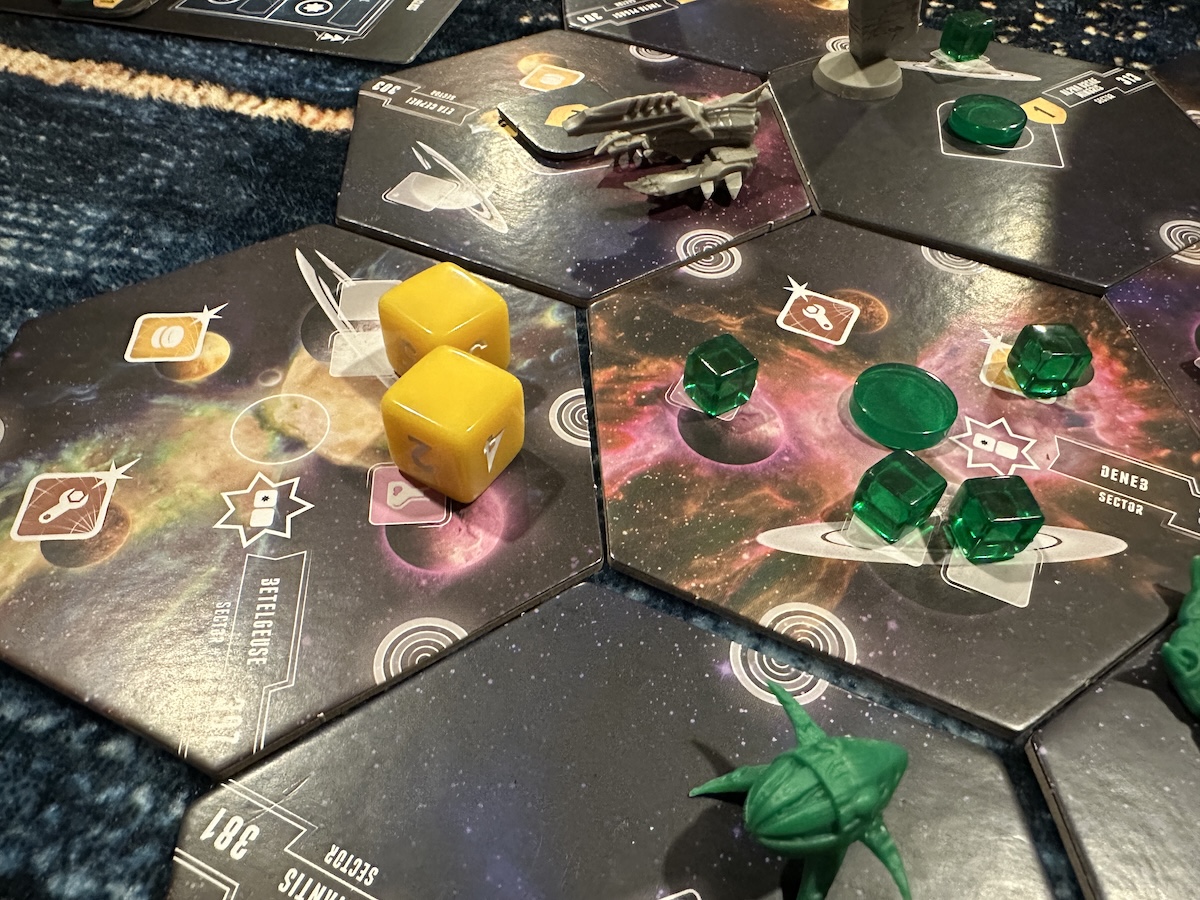
It’s rare enough to see two supernovas in a single game. I have never yet seen both discovered by the same player, but it was a short-lived advantage. But even if short lived, it’s hard to downplay the benefit two turns of 4-population cubes working. Planta was determined to ride this advantage into the late game by actively blocking off any attack routes.
Which brings us to the wormhole.
Planta and Hydran uncovered wormhole sectors early in the game, creating isolated pockets of space that seemed safely disconnected from the main conflict zones. The only way to access Planta and Hydran space were through the galactic center, these players both quickly entered a trade treaty and considered themselves safe.
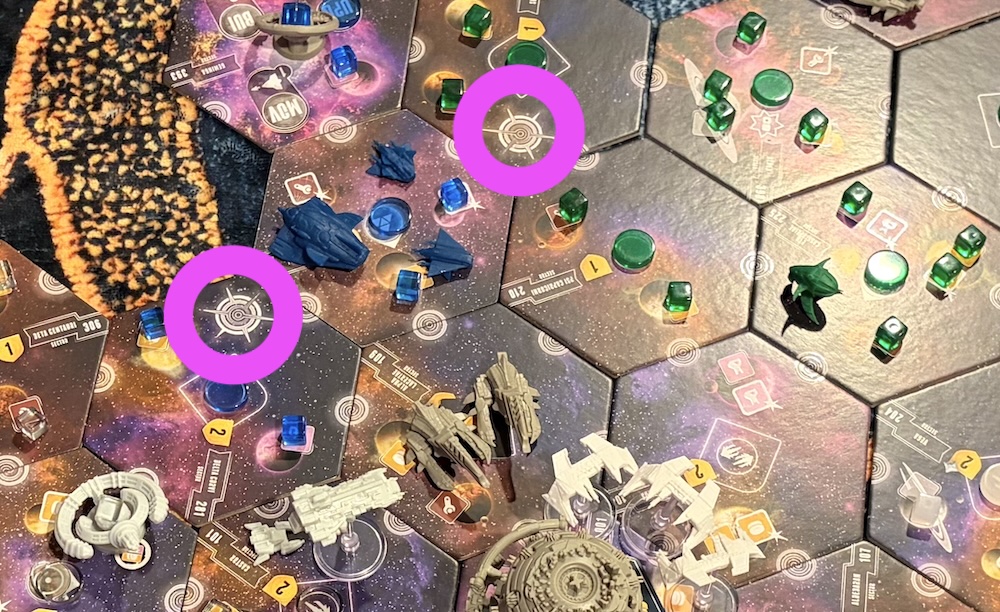
Or so they thought.
Round seven, the Magellan conquered some ancients and pulled the wormhole discovery tile. Under normal circumstances, the wormhole discovery tile is the board game equivalent of a participation trophy—technically part of the game, almost universally ignored and taken facedown as 2 points. Not last night.
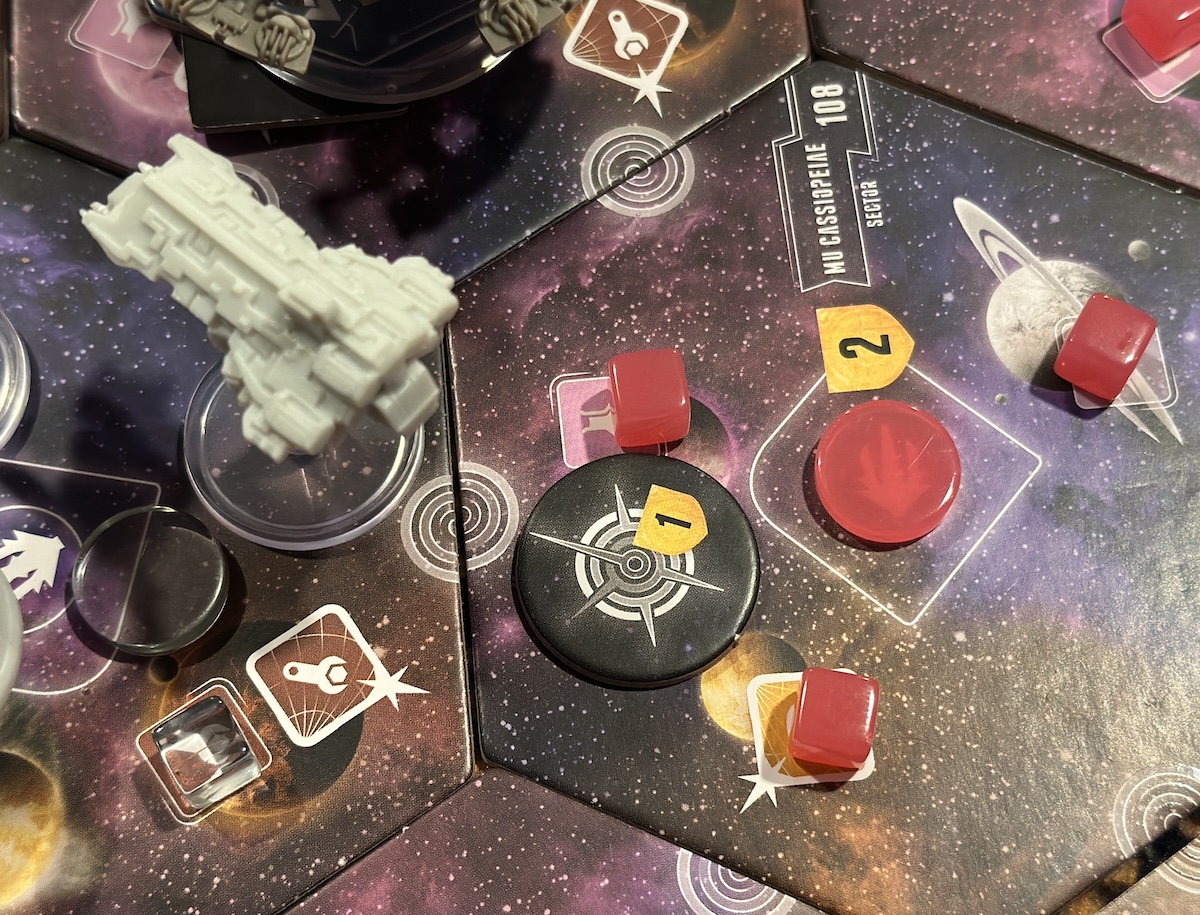
Suddenly, the board transformed. That third wormhole became a backdoor, a secret passage connecting the previously isolated systems into a single, vulnerable network. What had been safe rear positions were now exposed flanks. We poured through that wormhole corridor like water finding a crack, launching attacks from angles that shouldn’t have existed.
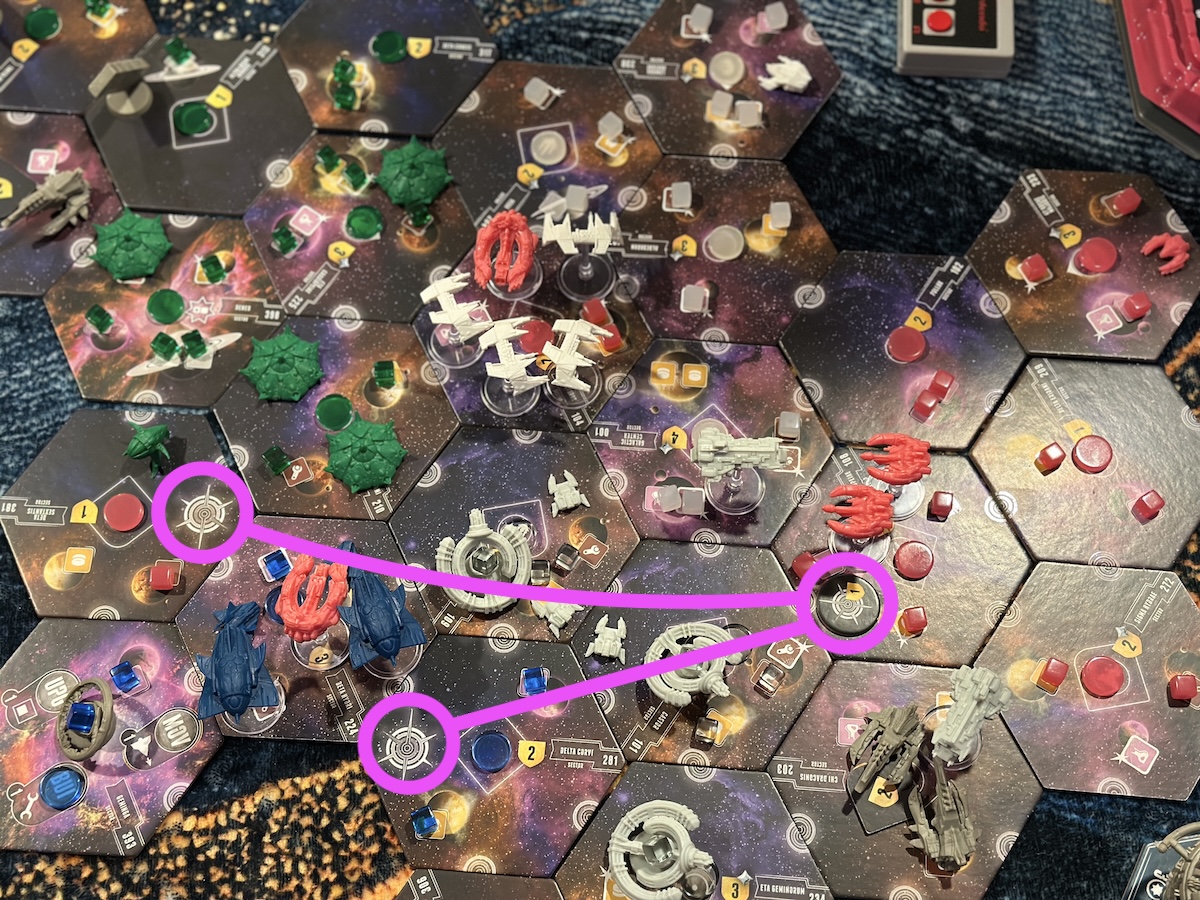
I’ve played dozens of Eclipse games. I’ve never seen wormhole discovery tile get such a warm welcome.
Planta played perfectly however, choking every attack route with starbases. Not upgraded and threatening starbases. Just bare-bones speed bumps, forcing attackers to waste actions and momentum. Behind this defensive screen, he quietly built four monoliths in the depths of his territory.
Twelve points. From monoliths. Another uncommon occurrence.
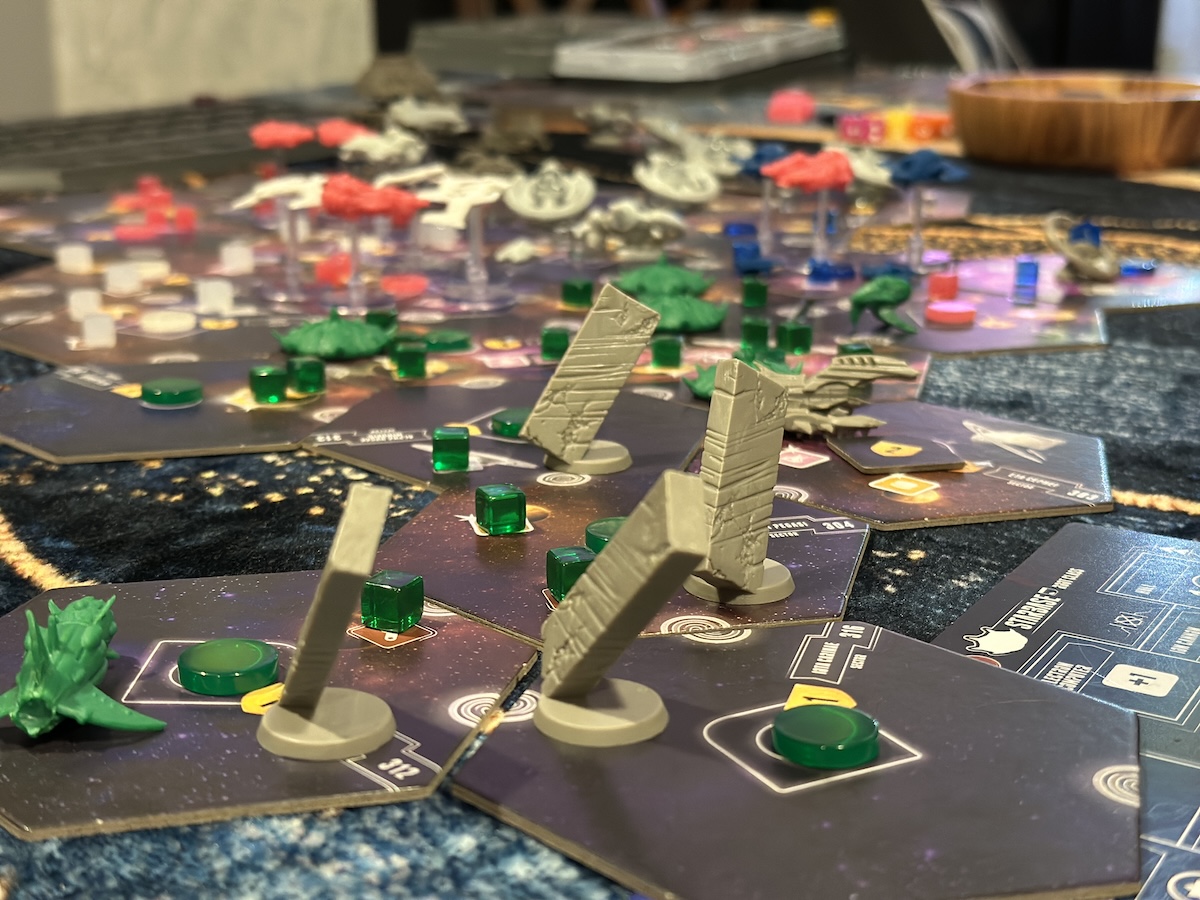
When the final scoring hit, Planta civilization emerged victorious in what was one of the most dynamic games we’ve ever played.